Small Space, Big Greenery: Making Preserved Moss Artwork Work Indoors
Adding natural elements to a home often feels like a challenge when floor space is tight. A large potted plant or a bulky terrarium can crowd a room rather than calm it. For anyone who wants the visual softness of greenery without sacrificing square footage, preserved moss artwork offers a practical alternative. These pieces attach to the wall, take up no floor area, and bring a tactile, organic quality that paint or wallpaper cannot match.
Preserved moss is real moss that has undergone a treatment process to replace its natural moisture with a plant-based glycerin solution. This stops the moss from growing, wilting, or drying out, so it keeps its color and texture for years without water, soil, or sunlight. The result is a stable, living-looking surface that stays green and supple. Unlike dried moss, which can become brittle and shed, preserved moss remains flexible and clean.
What Preserved Moss Artwork Actually Is
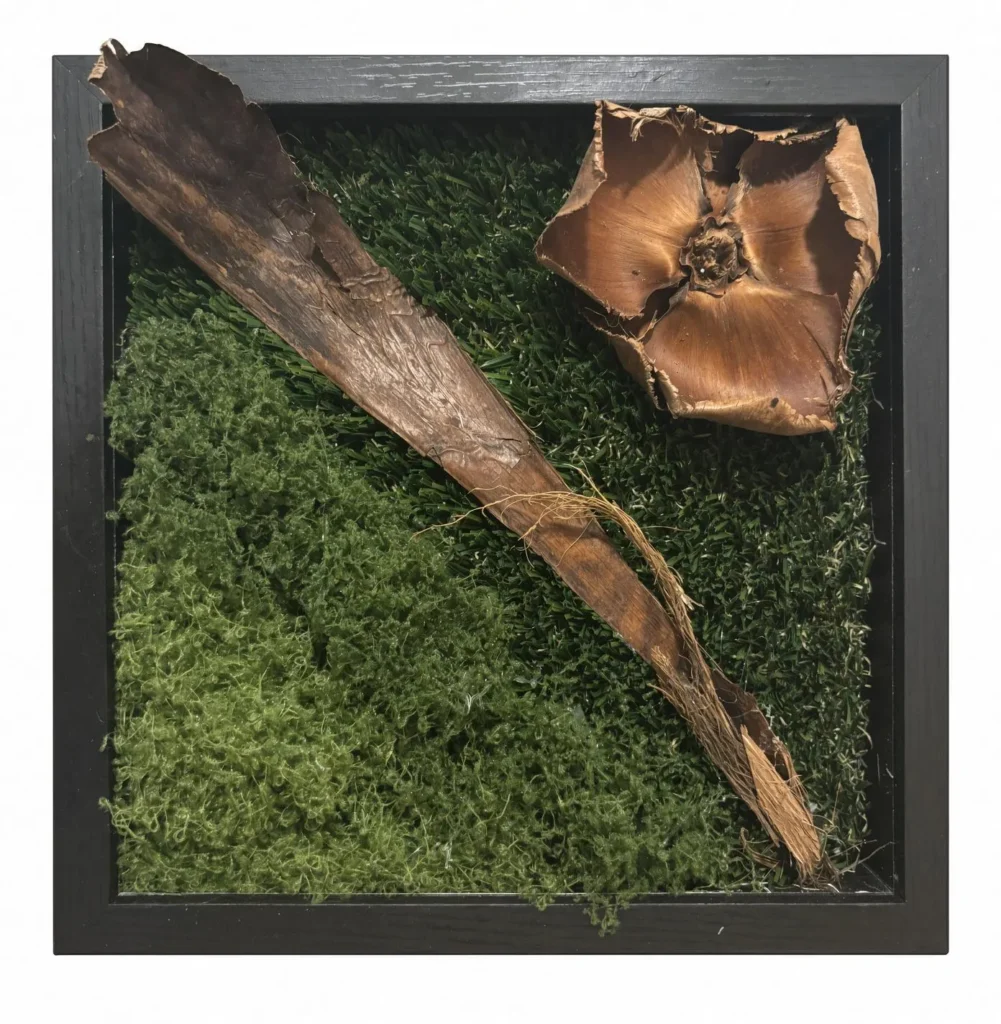
At its simplest, preserved moss artwork is a panel or frame filled with stabilized moss arranged in a pattern or abstract composition. The moss is mounted on a backing board, often with an adhesive, and then sealed into a frame or left as a floating panel. Because the moss is preserved rather than alive, it does not require the care that live plants need. No watering, no trimming, no worry about light levels. This makes it a strong option for rooms that get little natural light, such as hallways, bathrooms without windows, or north-facing offices.
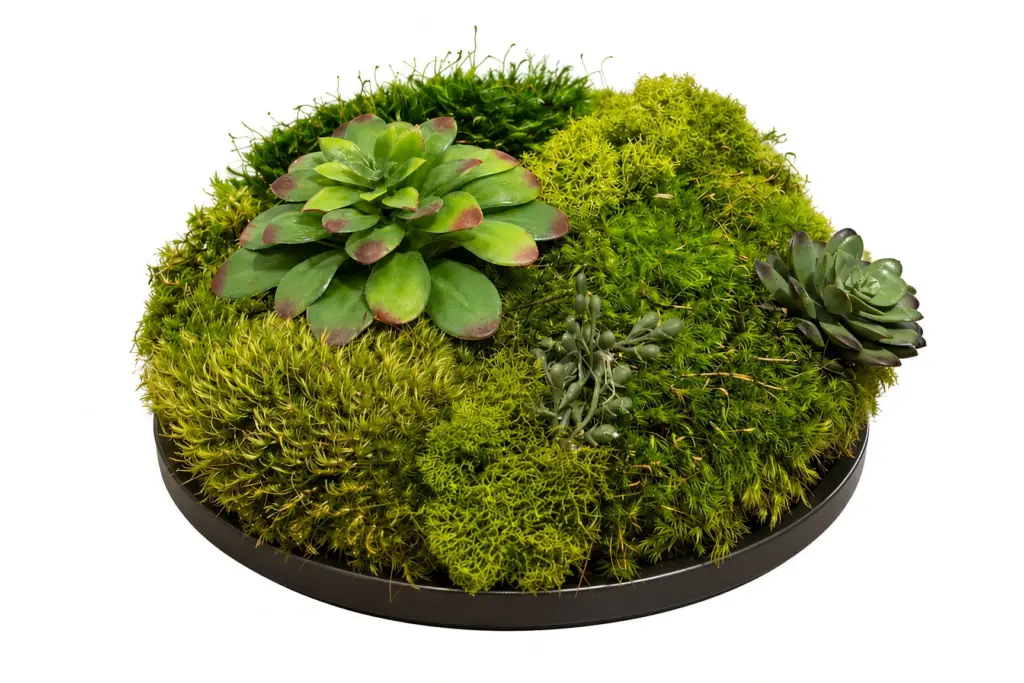
The moss itself can be sourced from several species. Flat moss, reindeer moss, and pillow moss are the most common choices. Each has a different texture and shade. Reindeer moss, for example, has a soft, branching structure that adds depth, while flat moss provides a smoother, carpet-like surface. Many pieces combine several types to create a layered look that mimics a natural landscape or a minimalist geometric design.
How Preservation Works and Why It Matters
The preservation process is what sets this material apart from both live plants and artificial greenery. Live moss requires high humidity, regular misting, and indirect light to survive indoors. Artificial moss, on the other hand, can look plasticky and does not offer the same sensory experience. Preserved moss retains the softness, the slight springiness, and the subtle color variation of natural moss. Because it is dead in the biological sense but chemically stabilized, it will not decay or grow mold if kept in normal indoor conditions.
The glycerin-based solution used in preservation also acts as a humectant, meaning it attracts a small amount of moisture from the air. This keeps the moss from drying out completely and helps it maintain its pliable feel. Over time, the color may fade slightly if the piece is exposed to direct sunlight for many hours each day, but in most indoor settings the color stays vibrant for several years. A light dusting every few months is all the maintenance required.
Why Preserved Moss Artwork Works in Small Spaces
Rooms with limited floor space often feel cramped because every surface is claimed. A side table holds a lamp, a shelf holds books, and the floor holds furniture. Adding a plant means sacrificing either floor area or counter space. Wall-mounted moss art bypasses that problem entirely. It occupies vertical real estate that would otherwise be blank, turning an empty wall into a focal point without eating into the usable floor plan.
There is also the matter of weight. Traditional potted plants in ceramic containers can be heavy, especially once the soil is wet. Large planters are difficult to move and can damage flooring or require reinforcement. Moss artwork is lightweight. A standard panel, even one that covers several square feet, can be hung with basic picture hooks or adhesive strips suitable for the wall type. This makes it easy to reposition or take down when redecorating.
Another advantage is the lack of mess. Live plants drop leaves, shed soil, and can attract gnats. Preserved moss sheds nothing. It does not produce pollen, so it is a good choice for people with common plant allergies. It also does not require any tools or supplies. There is no watering can, no fertilizer, no spray bottle. The piece simply hangs there, looking the same week after week.
Choosing the Right Piece for Your Room
Preserved moss artwork comes in many formats. The most straightforward is a framed rectangle with a flat moss surface, which works well as a minimalist accent above a console table or a desk. For those who prefer a more sculptural look, there are panels that combine moss with preserved ferns, lichen, or even small pieces of driftwood. These mixed-media pieces add depth and can resemble a tiny vertical garden.
Color is another factor to consider. Mosses range from bright lime green to deep forest green, and some preserved varieties are dyed to achieve specific hues. Natural green tones tend to blend easily with most color palettes, while dyed blues or purples can be used as a deliberate statement. Because the moss is preserved, the color will not change over time unless the piece is kept in a very sunny spot.
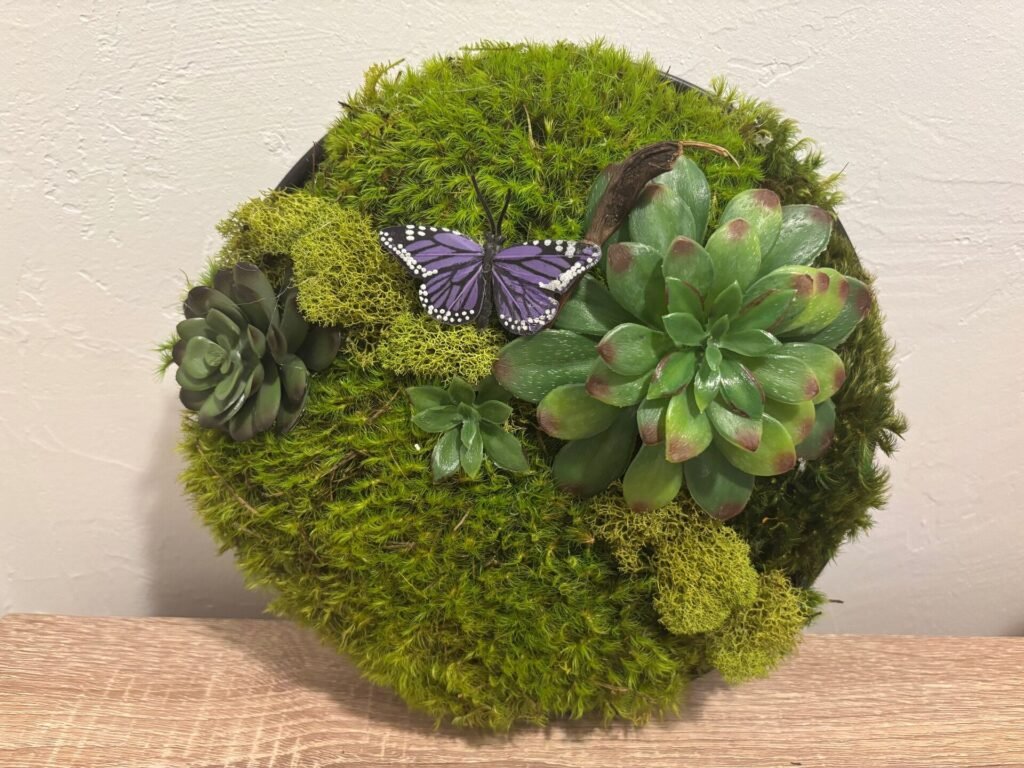
Size matters in small rooms. A single large panel can serve as a headboard alternative in a tight bedroom, or a long horizontal strip can break up a blank wall above a radiator. Smaller frames work well in groupings, arranged like a gallery wall with varied moss textures instead of photographs. The key is to treat the moss as a material with its own visual weight, not as a substitute for a plant you wish you had space for.
These pieces are often described as low maintenance botanical wall accents because they deliver the calming effect of nature without the upkeep. That phrase fits well here: preserved moss artwork is exactly that kind of accent, something that adds visual softness and organic texture to a room while demanding almost nothing from the person who lives there.
Where to Place It for Best Effect
Location matters for preserving the longevity of the piece. Avoid hanging moss art in direct sunlight for long periods, as UV exposure will gradually fade the dye in preserved moss. A north-facing wall or a spot that gets indirect light is ideal. Bathrooms can work as long as the room is well ventilated, preserved moss does not like constant high humidity, though it can handle occasional steam better than live moss can.
Kitchens are another possibility, but keep the piece away from cooking heat and grease. A spot near a dining area or breakfast nook, where it can be appreciated but not splashed, works best. In living rooms, consider placing the artwork above a sofa or a low console to draw the eye upward and make the ceiling feel higher. In hallways, a long vertical panel can act as a wayfinding element, adding interest to an otherwise transitional space.
Practical Considerations Before Buying
Not all preserved moss artwork is made the same way. Some pieces are assembled using a clear adhesive that can yellow over time, while others use a hidden mounting system that keeps the moss free of glue marks. When shopping, look for pieces that use high-quality preservation and a sealed backing to prevent any glycerin residue from seeping onto the wall. Most reputable sellers provide a care card with basic instructions on dusting and placement.
Weight is usually minimal, but always check the mounting requirements. A large panel might need two anchors to stay level, especially if it is wider than two feet. For renters, adhesive strips designed for lightweight frames can be a good option, but test a small area first to make sure the paint or wallpaper will not peel. The moss itself is flexible enough to withstand a gentle touch if someone brushes against it, but it is not meant to be handled repeatedly.
One common question is whether preserved moss attracts pests. Because the preservation process removes the organic matter that insects feed on, preserved moss is generally not a food source. It can collect dust, which may attract dust mites in very humid conditions, but regular light dusting with a soft brush or a dry microfiber cloth keeps that under control. No chemicals or sprays are needed.
For anyone looking to bring a sense of calm and natural texture into a compact room, preserved moss artwork is a direct and honest solution. It does not pretend to be a living plant, but it does offer a genuine connection to natural materials. The lack of upkeep means the piece will look the same a year from now as it did the day it was hung. That reliability is part of its appeal.
Whether placed in a narrow entryway, above a desk in a home office, or as a subtle headboard in a small bedroom, these low maintenance botanical wall accents prove that you do not need floor space to enjoy the benefits of greenery. The wall itself becomes the garden, and the room feels larger, softer, and more connected to the outdoors.